Master Efficient Time Management and Active Recall Methods to Pass the ACCA Exam Faster
 ACCA Director
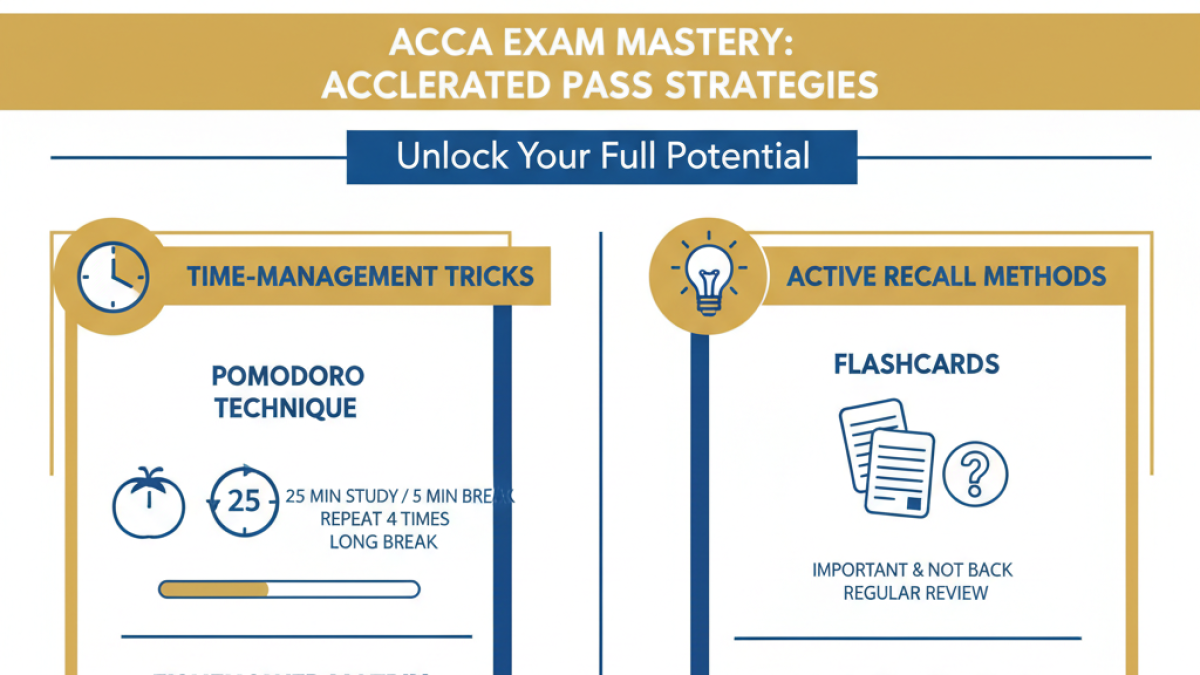
Whether you are a university student just entering the field of accounting and finance, or a working professional aiming to advance your career, the ACCA Exam (Association of Chartered Certified Accountants Exam) is a monumental peak to conquer. Faced with a massive syllabus, complex accounting standards, and challenging case analyses, many candidates feel overwhelmed. In reality, the key to passing smoothly is not your intelligence, but your study techniques and preparation strategy.
This article will provide you with an in-depth analysis of how to use scientifically-proven “time management frameworks” and “active recall techniques” to build an unbeatable ACCA exam preparation system. By reading this article, you will master practical methods, say goodbye to inefficient rote memorization, and achieve better results in all types of professional accounting exams with less time investment.
The Unique Challenges of the ACCA Exam and Strategies for Success
The ACCA exam curriculum consists of three major stages: Applied Knowledge, Applied Skills, and Strategic Professional, with a total of 13 subjects. This means candidates need to master a comprehensive range of knowledge, from basic financial accounting to advanced taxation, auditing, and even corporate strategic leadership.
Traditional study methods—such as repeatedly reading textbooks, highlighting key points, and copying notes—are often ineffective when dealing with such a massive volume of information. Psychological research shows that passive reading can create an illusion of “I’ve mastered this” (fluency illusion), but when faced with flexible, integrated questions in the exam, your mind can easily go blank.
To stand out in the ACCA exam, we need to shift our mindset and introduce two powerful tools: efficient time management to ensure steady study progress, and active recall techniques to strengthen long-term memory.
Time Management Frameworks Tailored for ACCA Preparation
Good time management not only helps you carve out more study time but also ensures your focus and productivity during those hours. Here are two time-management methods that are highly suited for ACCA preparation.
1. Pomodoro Technique: The Ultimate Tool for Tackling Dry Theory
The Pomodoro Technique was created by Francesco Cirillo. Its core concept is to divide work time into focused periods of 25 minutes (called a "Pomodoro"), with a short 5-minute break between each. After completing four Pomodoros, take a longer break of 15 to 30 minutes.
Specific Applications for ACCA Study Techniques:
- Breaking Down Tasks: ACCA textbooks are often hefty. Instead of vague goals like "finish Chapter 5 today," set a target such as "in the next Pomodoro, I will master the five-step model of IFRS 15 (Revenue Recognition)."
- Tackling Practice Questions: When practicing past papers, the Pomodoro Technique is especially effective. For example, while preparing for FR (Financial Reporting), you can use one Pomodoro to work through a major consolidation question, then use the 5-minute break to relax your mind, and in the next Pomodoro, review the answer and analyze mistakes.
- Maintaining Energy Levels: Many working candidates are exhausted after a long day. Promising yourself "just 25 minutes of study" is much easier to start than pulling an all-nighter for three hours, helping you overcome procrastination effectively.
2. Time Blocking Method: Perfectly Balancing Work and Study
Time blocking means scheduling all your time throughout the day—work, commute, entertainment, and study—like fitting together pieces of a puzzle. For those preparing for professional accounting exams, this method helps maximize fragmented time use and ensures core study hours remain uninterrupted.
How to Create Time Blocks for ACCA Preparation:
- Golden Study Hours: Identify the periods when your mind is sharpest (for example, 6:00-7:30 am or 8:00-10:00 pm), and reserve these "prime time blocks" for the most challenging subjects, such as SBR (Strategic Business Reporting) or AAA (Advanced Audit & Assurance).
- Making Use of Fragmented Time: Split 20-minute stretches during your commute or lunch break into “mini time blocks” for listening to expert audio explanations or using mobile apps to memorize key definitions for AA (Audit & Assurance).
- Buffer Time: Always leave about 20% of your schedule blank as a buffer. Plans rarely survive reality—especially during month-end close or busy seasons—so this margin helps prevent frustration from a derailed schedule.
Scientific Active Recall Techniques: Let Knowledge Take Root in Your Brain
Time management solves "when to study," while learning techniques address "how to study." Among all cognitive science-approved learning methods, "active recall" is proven to be the most effective way to cement long-term memory.
The core of active recall is: instead of just “stuffing” knowledge into your brain, you must deliberately practice “pulling” it out.
1. Spaced Repetition & Flashcard System
Human memory follows the "Ebbinghaus Forgetting Curve"—without review, we forget most new knowledge within days. Spaced Repetition Systems (SRS) prompt you to review content just as you're about to forget it, dramatically reinforcing memory.
Practical Suggestions for ACCA Preparation:
- Create Custom Flashcards: When studying TX (Taxation), where you need to remember lots of exemptions, tax rates, and deduction rules, use software like Anki or Quizlet to create flashcards. Write the question on the front (e.g., “What is the tax treatment for sole proprietor vehicle expenses?”) and the answer on the back.
- Regular Quizzing: Use commuting time each day to review your flashcards. The system will automatically bring up content you’re less familiar with more often, while lengthening the review intervals for content you know well. This approach is far more efficient than mindlessly flipping through the entire study binder.
2. Feynman Technique: The Magic of Simplifying Complexity
Nobel Laureate Richard Feynman proposed a study method based on “teaching others” to identify your knowledge gaps. If you can’t explain a concept simply, it means you don’t fully understand it yet.
How to Apply the Feynman Technique in ACCA Study:
- Step One: Take a blank sheet of paper and write the ACCA core concept you’re learning at the top, for example, "Porter's Five Forces Model" or "PESTEL Analysis" from the SBL (Strategic Business Leader) module.
- Step Two: Pretend you’re explaining the concept to a middle schooler with no accounting background. Use plain language, diagrams, and real-life examples to lay it out.
- Step Three: If you get stuck or have to use technical jargon, you’ve found your knowledge gap. Immediately reference the textbook or study notes and review that section.
- Step Four: Simplify and refine your explanation. For instance, when explaining IFRS 16 (Leases), instead of memorizing technical definitions like "right-of-use asset" and "lease liability," use an everyday analogy about renting a house and how it produces different accounting entries.
Integrating It All: Build Your All-Day ACCA Learning System
Once you’ve mastered the theory, you need to seamlessly blend time management with active recall, creating a daily ACCA preparation routine you can actually follow.
- Pre-Class Preview Stage: Set a 25-minute Pomodoro to skim the syllabus and get an overview of upcoming chapters—don’t worry about the details, just build a “knowledge tree” framework in your mind.
- Knowledge Absorption Stage: Use online courses or official study materials to systematically learn the theory. As you encounter important test topics, immediately turn them into flashcard questions, rather than just highlighting text.
- Post-Class Review Stage (Active Recall): On the day after studying, use the Feynman Technique to hand-draw a logic map (mind map) detailing the core concepts you learned yesterday. Any gaps in what you can recall identify your weak spots to target.
- Final Practice Exam Stage: In the final month before the test, assign most time blocks to practicing past papers. Use a "closed book—active recall—correct in red—record errors" loop. For long questions, time yourself: allot about 1.8 minutes per mark to simulate real exam pressure.
With ACCA’s professional exams getting tougher every year, mindless hard work is no longer enough. Only by arming yourself with scientific techniques can you balance work and life while still conquering this gold-standard accounting qualification.
Frequently Asked Questions (FAQ)
1. I only have two hours of free time a day—can I still prepare for the ACCA exam?
Absolutely. Successful ACCA preparation depends on the quality of study time, not just quantity. If you stick to time-blocking and make those two hours fully focused (easily split into four Pomodoros), and use active recall for targeted practice, your results will be much better than sitting drowsily in the library for 10 hours each weekend. We recommend signing up for just one paper per exam session and progressing steadily.
2. What should I do if I can’t recall a fact when practicing active recall?
This is completely normal—it means active recall is working! When you strain to remember but can’t, your brain’s neurons are highly engaged. When you look up the answer, your memory becomes much deeper than usual. Mark these points and test yourself on them again the next day, until you can recall smoothly.
3. Can I pass the ACCA Strategic Professional (P-Level) papers by just practicing past questions?
This isn’t recommended. The P-Level (e.g., SBR, SBL, AAA, etc.) requires not just knowledge, but also strong analytical, judgmental, and business insight skills. Rote memorization won't cut it. Use the Feynman Technique to deeply understand the core logic behind each standard or business model, then simulate the real exam with timed writing practice.
Start Your ACCA Success Journey
By mastering efficient time-management techniques and scientific active recall methods, you’re already one step ahead of most candidates who try to cram for the ACCA exam. Still, the road is long and challenging—having expert guidance, structured study materials, and accurate exam predictions can make your preparation far more effective.
If you’re determined to ace your next ACCA exam and avoid wasted effort, now is the time to act! We strongly encourage you to visit the world-leading ACCA training platform: https://www.globalapc.com to explore high-yield resources, interactive courses, and exclusive mock exam banks designed by professional ACCA tutors. Let the experts guide you and fast-track your journey to ACCA qualification!